Get A Free Second Opinion Today!


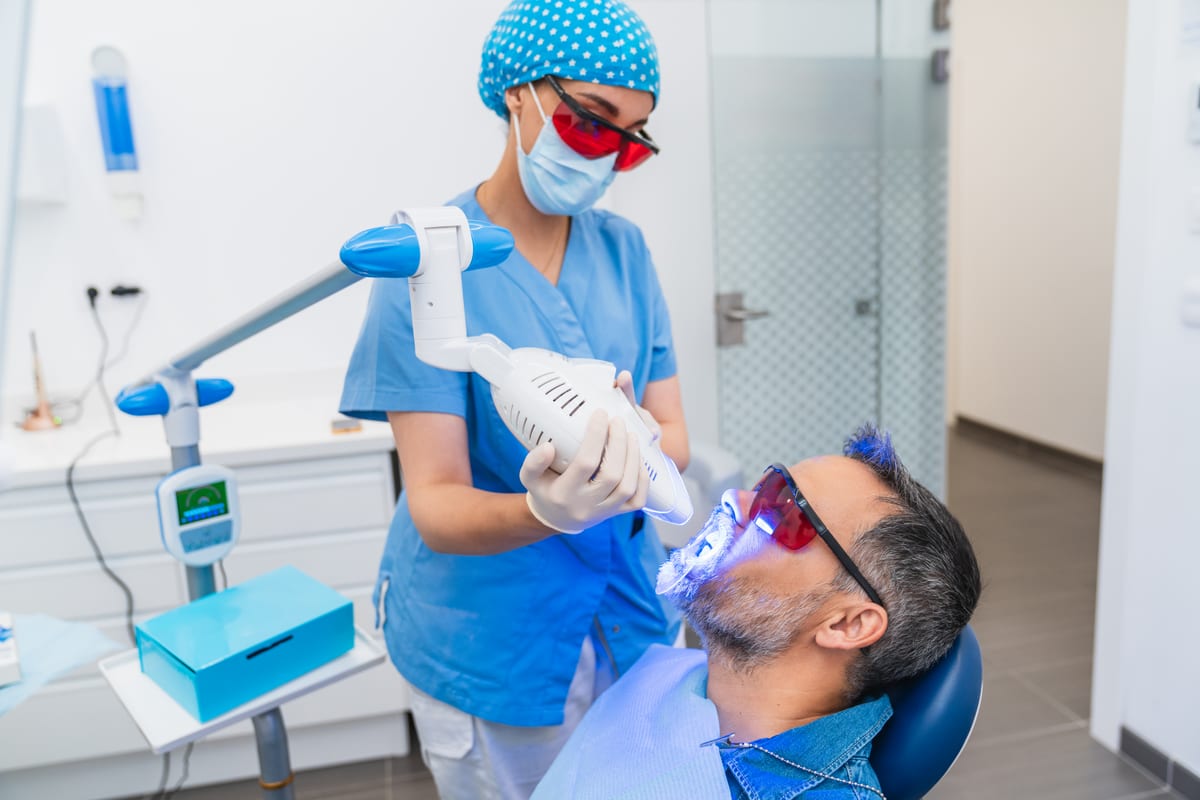
Many patients ask, is professional teeth whitening safe for your enamel and gums in Parker? It is a great question — and a very common one. Whitening treatments have come a long way. When performed correctly, professional whitening is considered safe for most healthy adults. Still, understanding the facts helps you make a confident, informed decision.
At Castlewood Dental in Parker, CO, Dr. Ben Sirrine walks every patient through their options before any treatment begins. This article covers what the research says about enamel safety, gum sensitivity, and who should think twice before whitening.
How Professional Teeth Whitening Works — and Why Safety Matters
Professional whitening uses hydrogen peroxide or carbamide peroxide to break apart stain molecules inside the enamel. The concentration used in a dental office is much higher than over-the-counter products. That is why results are faster and more dramatic.
Higher concentration also means the treatment must be applied carefully. Dentists use protective barriers and custom trays to keep the bleaching agent away from your gums and soft tissue. This precision is one key reason in-office whitening is safer than many DIY options.
The process is well-studied. Major dental organizations, including the American Dental Association, recognize professional whitening as a safe and effective cosmetic procedure when supervised by a licensed dentist.
Is Professional Teeth Whitening Safe for Your Enamel in Parker?
This is the concern patients mention most often. The short answer is yes — professional whitening does not remove or permanently damage enamel when used as directed. Studies show that peroxide-based whitening does not alter the mineral structure of healthy enamel in any lasting way.
However, whitening does temporarily open the pores of the enamel. This is what allows the bleaching agent to reach stains. After treatment, the enamel rehydrates and the pores close again. Sensitivity during this window is normal and expected.
Patients with already-weakened or thin enamel need a closer evaluation first. Your dentist will check for signs of enamel erosion before recommending any whitening treatment. Cosmetic Dentistry at Castlewood Dental always begins with a full oral health assessment.
What About Gum Sensitivity After Whitening?
Gum irritation is the second most common concern patients raise. It usually happens when the whitening gel contacts the gum tissue directly. In a professional setting, your dentist places a protective barrier over the gums before applying the gel. This greatly reduces the risk of irritation.
Some patients still notice mild gum tenderness after treatment. This typically fades within 24 to 48 hours. It is not a sign of permanent damage — just temporary sensitivity while the tissue settles.
If you already experience gum sensitivity or have been diagnosed with gum disease, let your dentist know before your whitening appointment. Active gum disease needs to be treated first. Whitening on inflamed or infected gum tissue can make discomfort much worse.
Who Should Avoid or Delay Teeth Whitening?
Not everyone is an ideal candidate for whitening right away. Some patients benefit from completing other dental work first. Here is a list of situations where your dentist may recommend waiting:
- Active gum disease or untreated periodontal issues
- Significant enamel erosion or exposed dentin
- Cavities that have not yet been treated
- Tooth sensitivity that is already severe before whitening
- Pregnancy or breastfeeding — whitening is typically postponed during this time
- Crowns, veneers, or bonding in visible areas — these do not respond to bleaching agents
Children and teenagers under 16 should generally avoid whitening. Their tooth pulp is still developing, which makes the teeth more reactive to peroxide. Dr. Ben Sirrine reviews each patient’s full dental history before making any recommendation.
It is also worth noting that whitening only works on natural tooth enamel. If you have visible restorations in your smile zone, those will stay the same shade after whitening. Your dentist can help you plan for a consistent result.
Benefits of Choosing Professional Whitening Over Store-Bought Kits
Many patients try whitening strips or trays from a pharmacy first. These products can work to some degree, but they come with real limitations. Professional whitening offers several advantages that over-the-counter options simply cannot match:
- Custom-fitted trays that protect your gums more effectively
- Higher-strength gel that delivers faster, more even results
- Supervision from a licensed dentist who can catch problems early
- Pre-treatment screening to confirm you are a safe candidate
- Post-treatment guidance on how to maintain your results longer
Store-bought kits use one-size trays that do not seal well against the gums. This increases the chance of the gel irritating soft tissue. Professional kits are made from impressions of your actual teeth.
Choosing professional whitening through a trusted practice like Castlewood Dental also means you have a dentist to call if any concerns come up after treatment. That peace of mind has real value.
How to Maintain Your Results and Protect Your Enamel Long-Term
After whitening, your enamel is temporarily more porous. Avoiding deeply pigmented foods and drinks for the first 48 hours helps protect your results. Coffee, red wine, dark berries, and tomato sauce are the main culprits during this window.
Using a sensitivity toothpaste starting a few days before your appointment can also reduce post-treatment discomfort. Your dentist may also recommend a fluoride rinse to help remineralize the enamel after bleaching.
Regular checkups are essential for keeping your smile healthy between whitening sessions. Family Dentistry at Castlewood Dental helps Parker patients of all ages stay on top of their oral health between cosmetic appointments.
Talk to Dr. Ben Sirrine Before Your First Whitening Treatment
Professional teeth whitening is one of the most studied and widely performed cosmetic dental procedures available today. For most healthy patients, it is safe, effective, and well-tolerated. The key is starting with a proper evaluation.
Dr. Ben Sirrine and the team at Castlewood Dental take a thorough, patient-first approach to every cosmetic consultation. We review your enamel health, gum condition, and existing restorations before recommending any whitening plan. Your safety always comes first.
If you have been wondering whether whitening is right for you, we are happy to answer your questions in person. Book Now to schedule your appointment with our team.
Frequently Asked Questions
Does professional teeth whitening damage enamel permanently?
No. Research consistently shows that professional whitening does not cause permanent enamel damage when used as directed by a dentist. The enamel temporarily becomes more porous during treatment but rehydrates and closes again within a day or two. Patients with pre-existing enamel erosion should be evaluated before whitening.
How long does tooth sensitivity last after whitening?
Most patients experience mild sensitivity for 24 to 72 hours after a professional whitening treatment. Using a sensitivity toothpaste before and after the procedure can help. If sensitivity lasts longer than a few days or becomes severe, contact your dentist right away.
Can I whiten my teeth if I have crowns or veneers?
Whitening agents only work on natural tooth enamel. Crowns, veneers, and dental bonding will not change shade during a whitening treatment. If you have restorations in visible areas of your smile, talk to your dentist about how to achieve a consistent result across your whole smile.
Is professional whitening safe during pregnancy?
Most dentists recommend postponing elective whitening treatments during pregnancy and breastfeeding. While there is limited evidence of harm, it is generally considered best practice to wait until after the baby is born and breastfeeding has ended. Always inform your dentist if you are pregnant or nursing.
How often can I safely whiten my teeth?
Most dentists recommend spacing professional whitening sessions at least six to twelve months apart. Whitening too frequently can increase sensitivity and may affect enamel over time. Your dentist will help you develop a maintenance schedule that keeps your smile bright without overdoing it.

Unable to locate Global Block : 1468