Get A Free Second Opinion Today!



If you live in Parker, CO, you probably already know how much locals enjoy a little indulgence—whether it’s dessert after a meal on Mainstreet or a treat during a movie night at home. But here’s a surprising question many patients ask at Castlewood Dental:
Can dark chocolate actually be good for your teeth?
The answer may surprise you. When enjoyed correctly and in moderation, dark chocolate can offer real oral health benefits—especially compared to sugary candies and milk chocolate. Let’s break down the science, the myths, and how Parker residents can enjoy chocolate without harming their smiles.
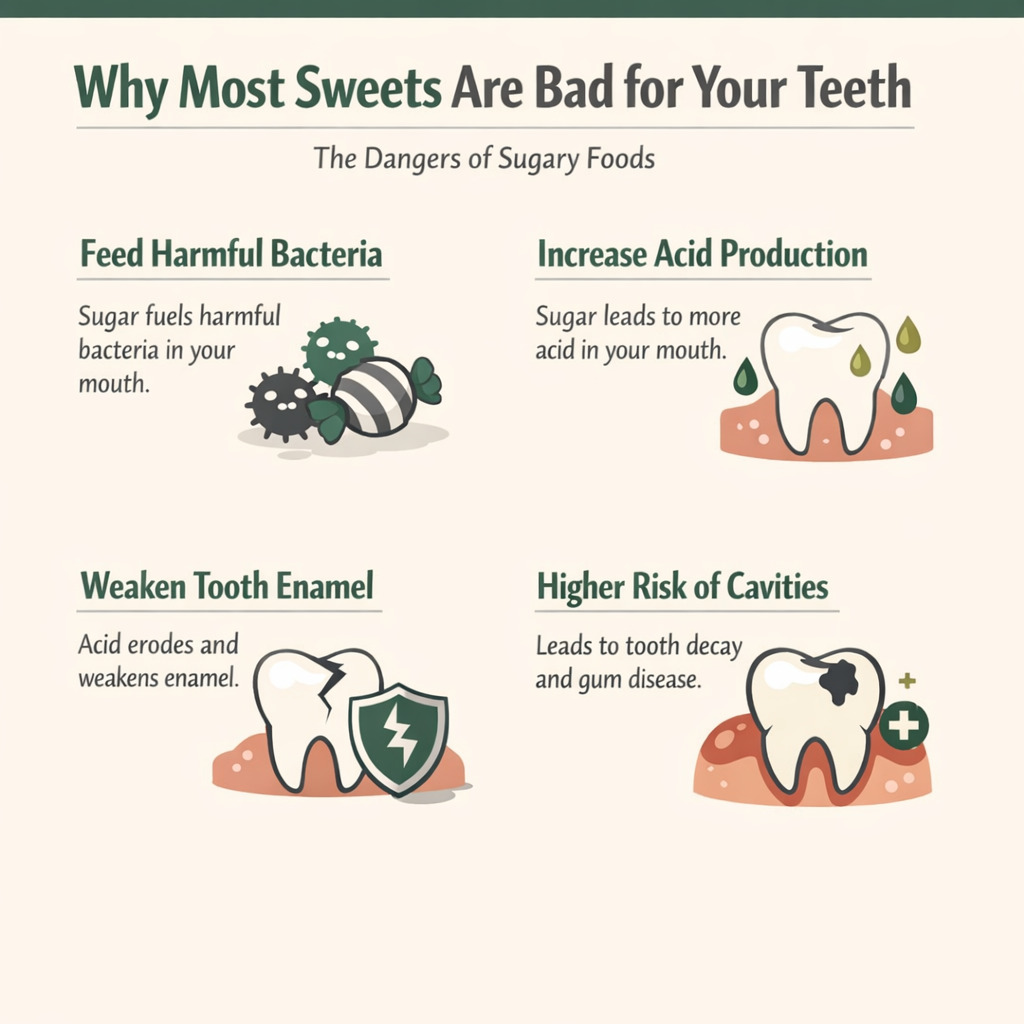
Why Most Sweets Are Bad for Your Teeth
Before we get to the good news, it’s important to understand why dentists usually warn against sweets.
Sugary foods:
- Feed harmful oral bacteria
- Increase acid production in the mouth
- Weaken tooth enamel
- Raise the risk of cavities and gum disease
But dark chocolate is different—and here’s why.
What Makes Dark Chocolate Different?
Not all chocolate is created equal. Dark chocolate, especially varieties with 70% cocoa or higher, contains significantly less sugar and more beneficial compounds than milk or white chocolate.
Key components that benefit teeth:
- Cocoa polyphenols – help reduce harmful bacteria
- Flavonoids – support enamel strength
- Theobromine – may help harden enamel
Unlike sticky candies, dark chocolate also melts quickly, meaning it doesn’t cling to teeth for long periods.
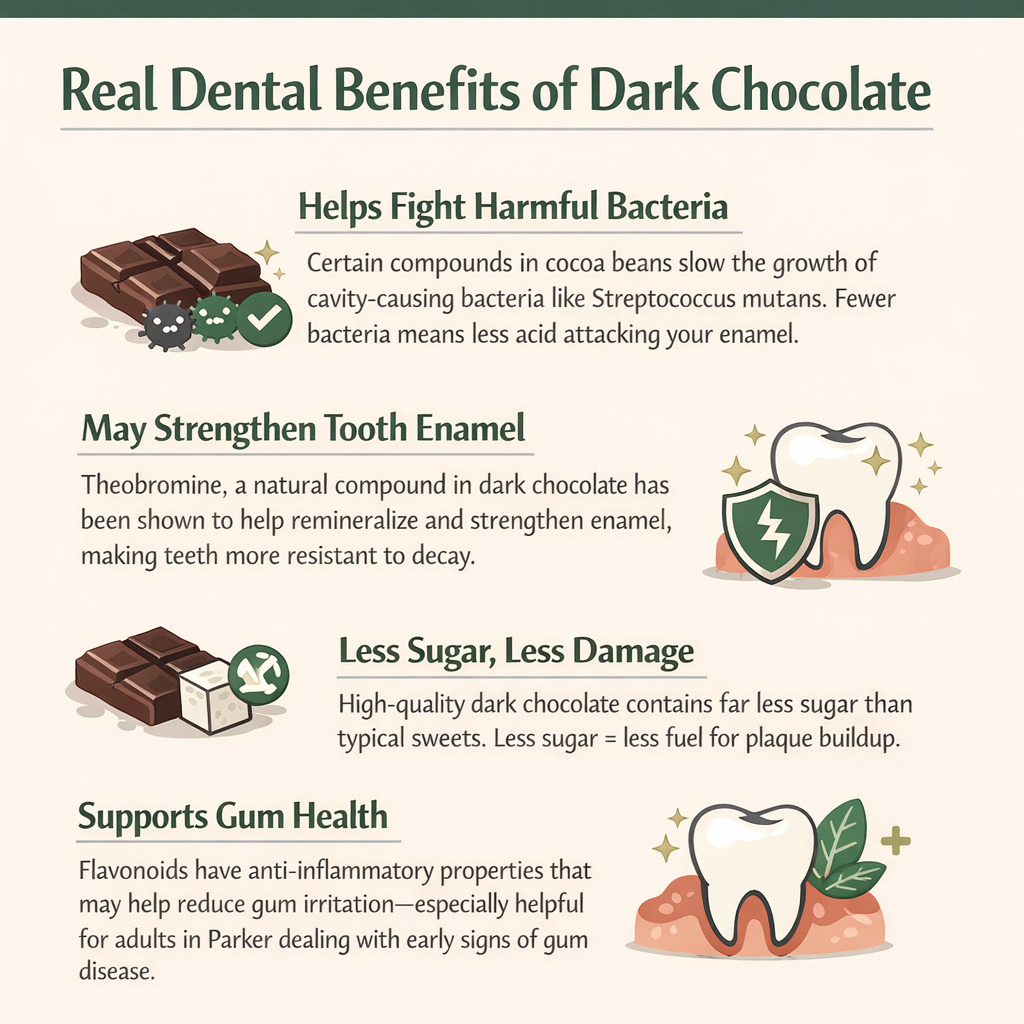
Real Dental Benefits of Dark Chocolate
1. Helps Fight Harmful Bacteria
Certain compounds in cocoa beans slow the growth of cavity-causing bacteria like Streptococcus mutans. Fewer bacteria means less acid attacking your enamel.
2. May Strengthen Tooth Enamel
Theobromine, a natural compound in dark chocolate, has been shown to help remineralize and strengthen enamel, making teeth more resistant to decay.
3. Less Sugar, Less Damage
High-quality dark chocolate contains far less sugar than typical sweets. Less sugar = less fuel for plaque buildup.
4. Supports Gum Health
Flavonoids have anti-inflammatory properties that may help reduce gum irritation—especially helpful for adults in Parker dealing with early signs of gum disease.
How to Enjoy Dark Chocolate Without Harming Your Smile
Even healthy treats should be enjoyed mindfully. Here’s how Parker residents can enjoy dark chocolate safely:
Smart chocolate tips:
- Choose 70% cocoa or higher
- Avoid fillings like caramel or nougat
- Eat chocolate with meals, not as frequent snacks
- Drink water afterward to rinse sugars away
- Brush and floss regularly, especially before bed
If you’re unsure whether your diet is affecting your teeth, a local dentist can help identify early signs of enamel wear or decay.
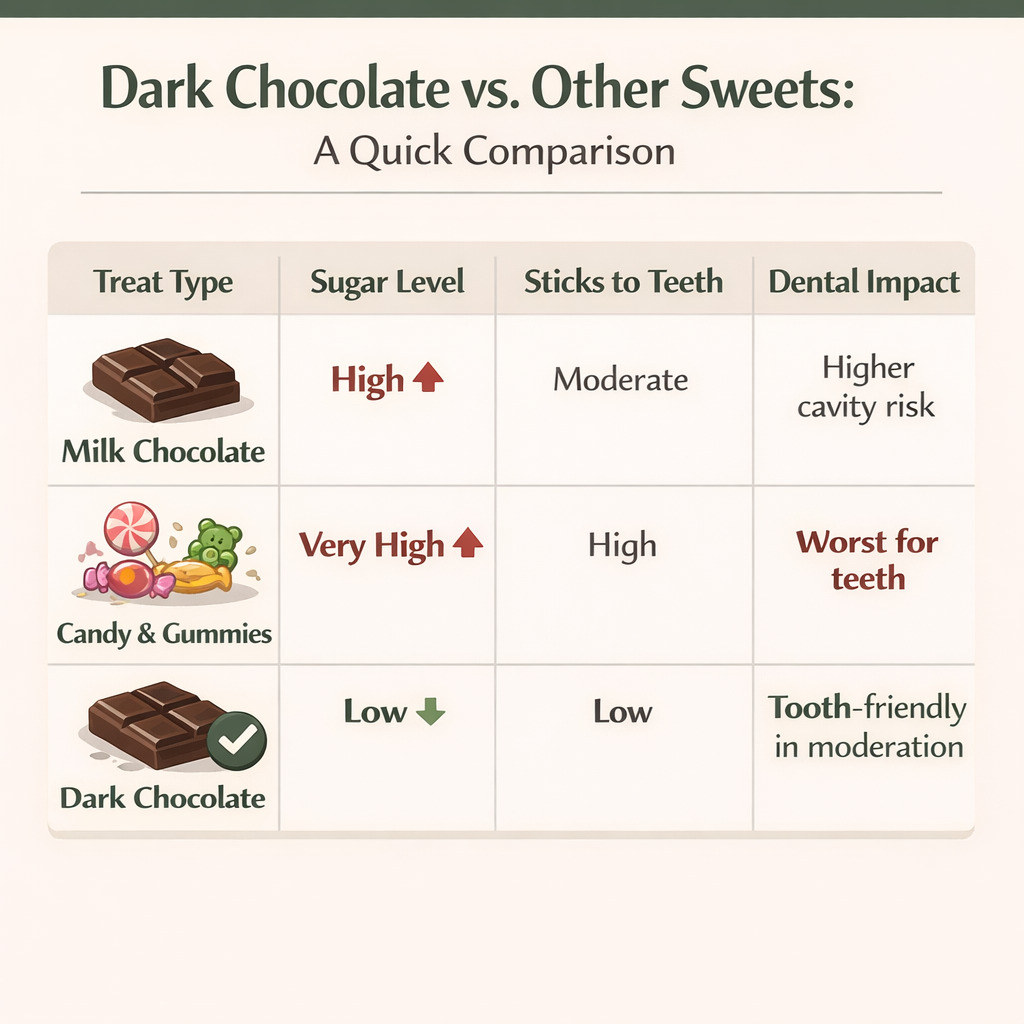
Dark Chocolate vs. Other Sweets: A Quick Comparison
Oral Health in Parker’s Busy, Active Lifestyle
Life in Parker, CO tends to move fast. Between youth sports, outdoor activities, school drop-offs, and full work schedules, many families rely on quick snacks to keep going throughout the day. Choosing smarter options—such as enjoying dark chocolate in moderation instead of highly sugary treats—can help lower dental risks without giving up small everyday pleasures.
At Castlewood Dental in Parker, we often remind patients that maintaining good oral health isn’t about being perfect. It’s about balance. Consistent habits and informed choices, even small ones, add up over time and play a big role in protecting your smile.
Enjoy Chocolate—Just Be Smart About It
Dark chocolate proves that oral health doesn’t have to mean giving up everything you love. When chosen wisely, it can be one of the most tooth-friendly indulgences available.
If you want personalized advice on diet, enamel health, or cavity prevention, the team at Castlewood Dental in Parker, CO is here to help.
Call Us at (303) 963-4011 to schedule an appointment and enjoy peace of mind knowing your smile is in expert hands.
Frequently Asked Questions (FAQs)
Is dark chocolate completely safe for teeth?
Dark chocolate is safer than most sweets, but it still contains sugar. Moderation and proper oral hygiene are key.
What if I already have cavities or sensitive teeth?
If you have existing dental issues, it’s best to consult a dentist before making dietary changes.
How much dark chocolate is okay?
A small piece (about 1 ounce) a few times a week is generally fine for most people with good oral hygiene.


Unable to locate Global Block : 1468