Get A Free Second Opinion Today!


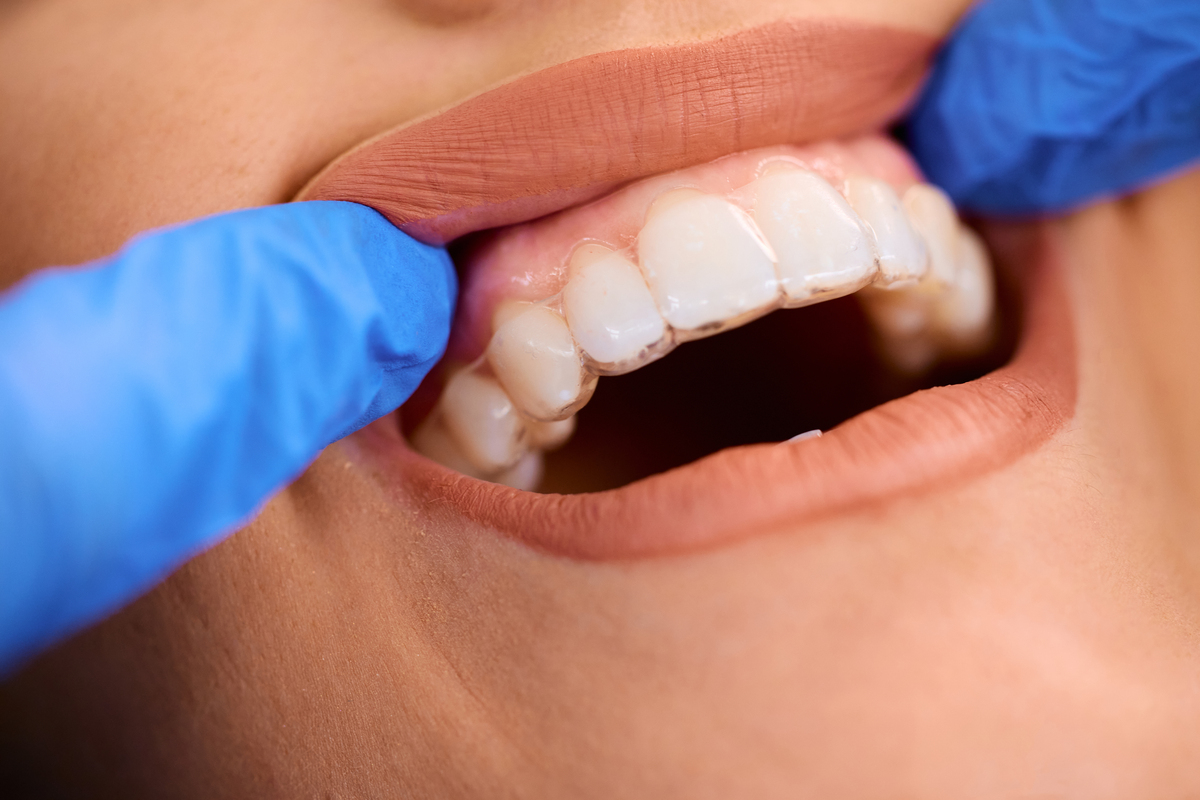
Bite problems are more common than many people realize. Conditions such as overbite, underbite, and crossbite affect how the upper and lower teeth meet when the mouth closes. While these issues may seem minor at first, they can influence everyday activities such as chewing, speaking clearly, and even jaw comfort. Over time, an untreated bite problem may also contribute to uneven tooth wear or strain on the jaw joints.
Many people believe that metal braces are the only way to correct these alignment concerns. However, orthodontic technology has advanced significantly in recent years. Today, clear aligner systems provide a more discreet approach for improving tooth alignment and bite balance. In many cases, Invisalign is used to address mild to moderate bite issues while allowing patients to maintain a natural appearance during treatment.
This blog explains how bite problems develop, how clear aligners work, and when this treatment option may help improve bite alignment.
Understanding Common Bite Problems
Bite alignment refers to how the upper and lower teeth fit together when the mouth closes. Ideally, the teeth should meet in a balanced way so that pressure is evenly distributed while chewing or speaking.
When the bite is not aligned properly, certain teeth may experience extra pressure while others may not function as intended. Over time, this imbalance can affect both comfort and oral health.
What Is an Overbite?
An overbite occurs when the upper front teeth extend significantly over the lower front teeth. A slight overlap is normal, but excessive overlap may cause problems. When the upper teeth cover too much of the lower teeth, the pressure during chewing can become uneven.
People with a pronounced overbite may notice faster wear on certain teeth or tension in the jaw. In some cases, the lower teeth may even contact the roof of the mouth when biting down. Addressing the alignment early can help reduce long-term strain on the teeth and jaw joints.
What Is an Underbite?
An underbite is the opposite alignment pattern. In this situation, the lower teeth extend in front of the upper teeth when the mouth closes. This can change the way the jaw functions and may affect facial balance.
Underbites can make chewing more difficult and may place additional pressure on the back teeth. Some people also notice speech changes because the front teeth no longer meet in their usual position.
What Is a Crossbite?
A crossbite occurs when certain upper teeth sit inside the lower teeth instead of slightly outside them. This misalignment may affect a single tooth or several teeth along the arch.
When a crossbite develops, some teeth may receive more pressure than others. Over time, this can lead to enamel wear, gum irritation, or shifting teeth.
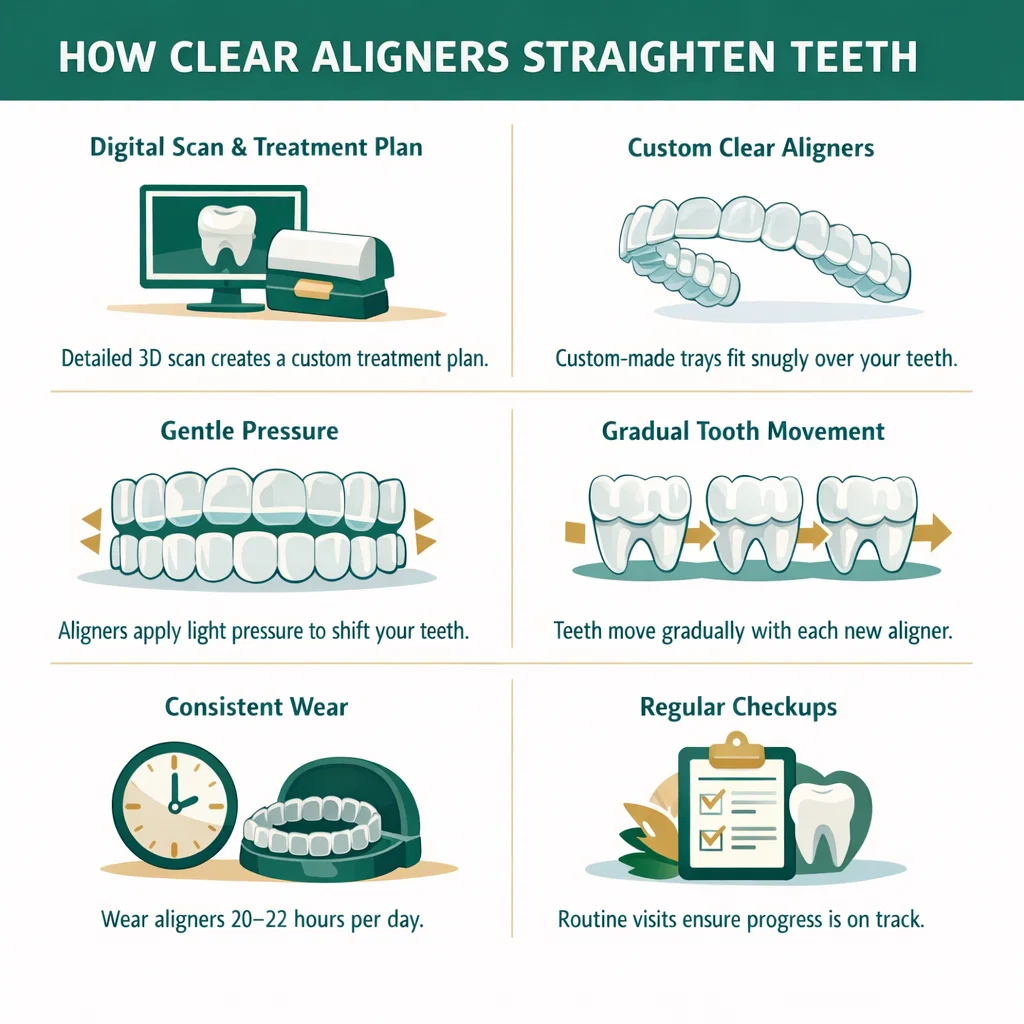
How Clear Aligners Straighten Teeth
Clear aligner therapy uses a sequence of custom-designed trays that gradually move teeth into improved alignment. Each aligner is designed to make small adjustments to tooth position while remaining comfortable and discreet.
Custom Clear Aligners
Treatment typically begins with a digital scan of the teeth. Advanced imaging technology captures detailed measurements of the patient’s bite and tooth positions. Using these digital models, an Invisalign in Parker is created specifically for that patient’s treatment plan.
The trays fit snugly over the teeth and apply controlled pressure. This pressure gently encourages teeth to shift into new positions over time.
Gradual Tooth Movement
Each aligner in the series is worn for a short period before being replaced with the next set. As patients move through the aligner sequence, the teeth continue to shift in small increments. This gradual movement helps maintain comfort while improving alignment.
Orthodontic checkups ensure the process stays on track and adjustments are made when necessary.
Importance of Wearing Aligners Consistently
Consistency plays a major role in successful treatment. Most orthodontic plans recommend wearing aligners for about 20 to 22 hours each day. Removing them only for meals and oral hygiene helps maintain steady progress throughout the treatment timeline.
Can Clear Aligners Correct an Overbite?
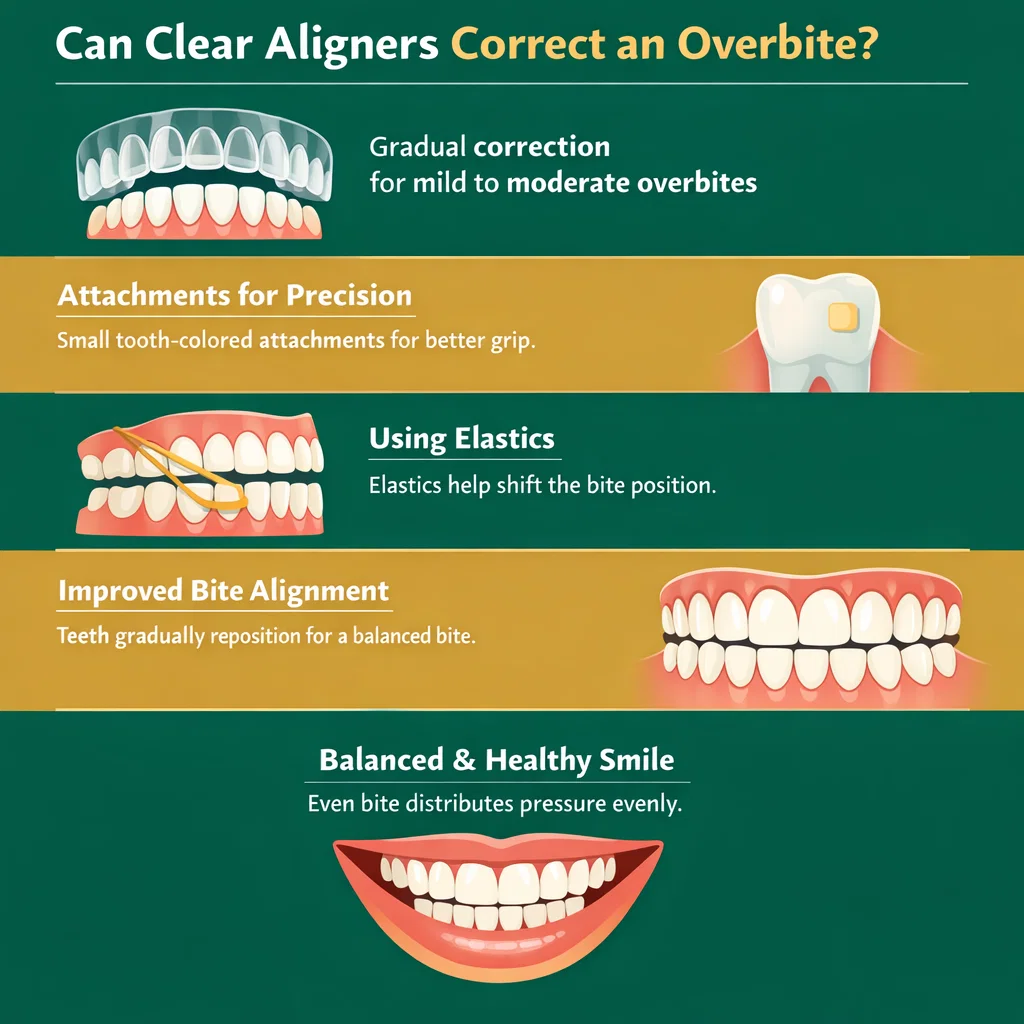
Mild to moderate overbites often respond well to aligner therapy. With careful treatment planning, orthodontic systems such as Invisalign can reposition teeth gradually to improve how the upper and lower arches meet.
In some cases, small attachments are placed on certain teeth. These attachments allow the aligners to apply more precise pressure and guide tooth movement more effectively. Elastics may also be used to encourage proper bite positioning.
As treatment progresses, the overlap between the upper and lower teeth becomes more balanced. This gradual adjustment can reduce strain on the teeth and help distribute chewing pressure more evenly across the bite.
Can Clear Aligners Fix an Underbite?
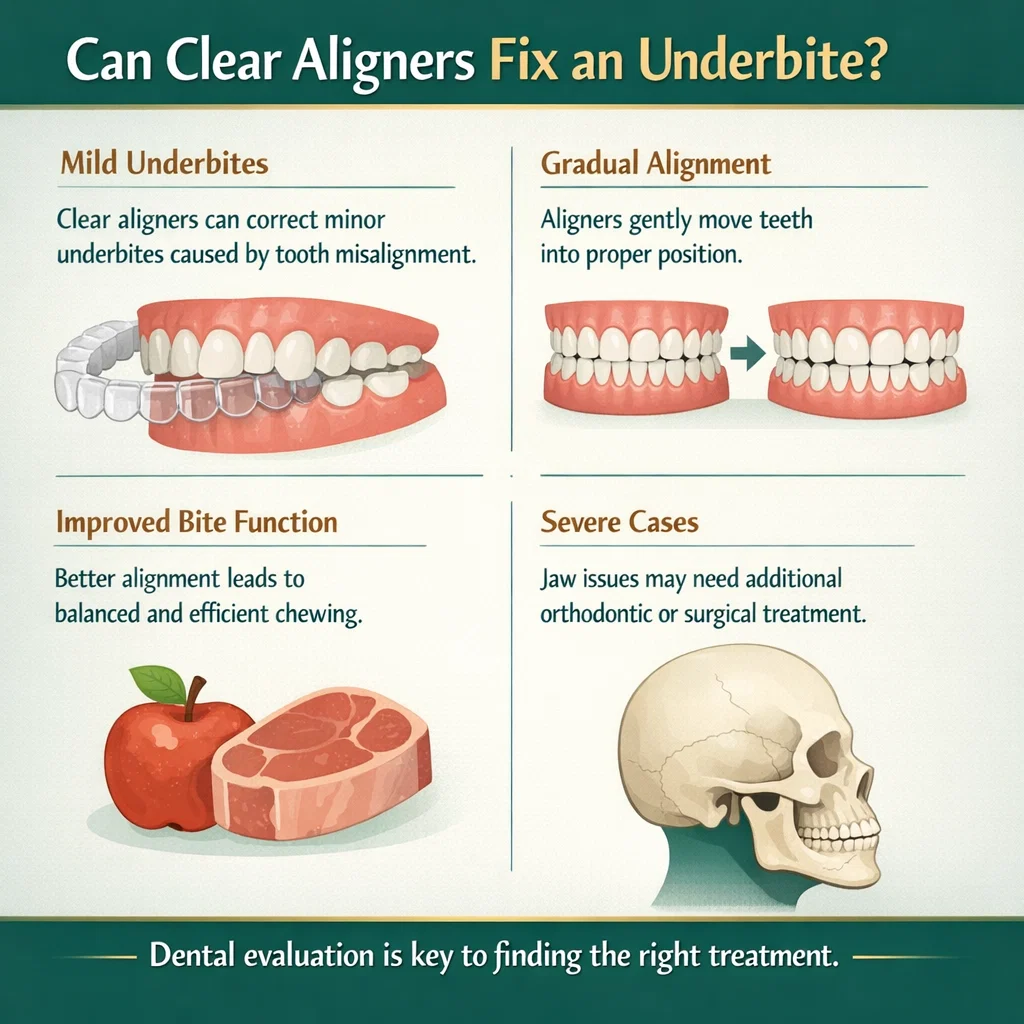
Clear aligners may also improve certain underbite cases, particularly when the issue is related to tooth positioning rather than jaw structure.
By gradually guiding teeth into improved alignment, orthodontic systems such as Invisalign can help bring the upper and lower teeth into a more balanced relationship. This adjustment may improve chewing efficiency and reduce uneven pressure on the teeth.
However, severe underbites that involve significant jaw differences may require additional orthodontic or surgical treatment. A dental evaluation helps determine whether aligners alone are appropriate for each case.
Can Clear Aligners Treat a Crossbite?
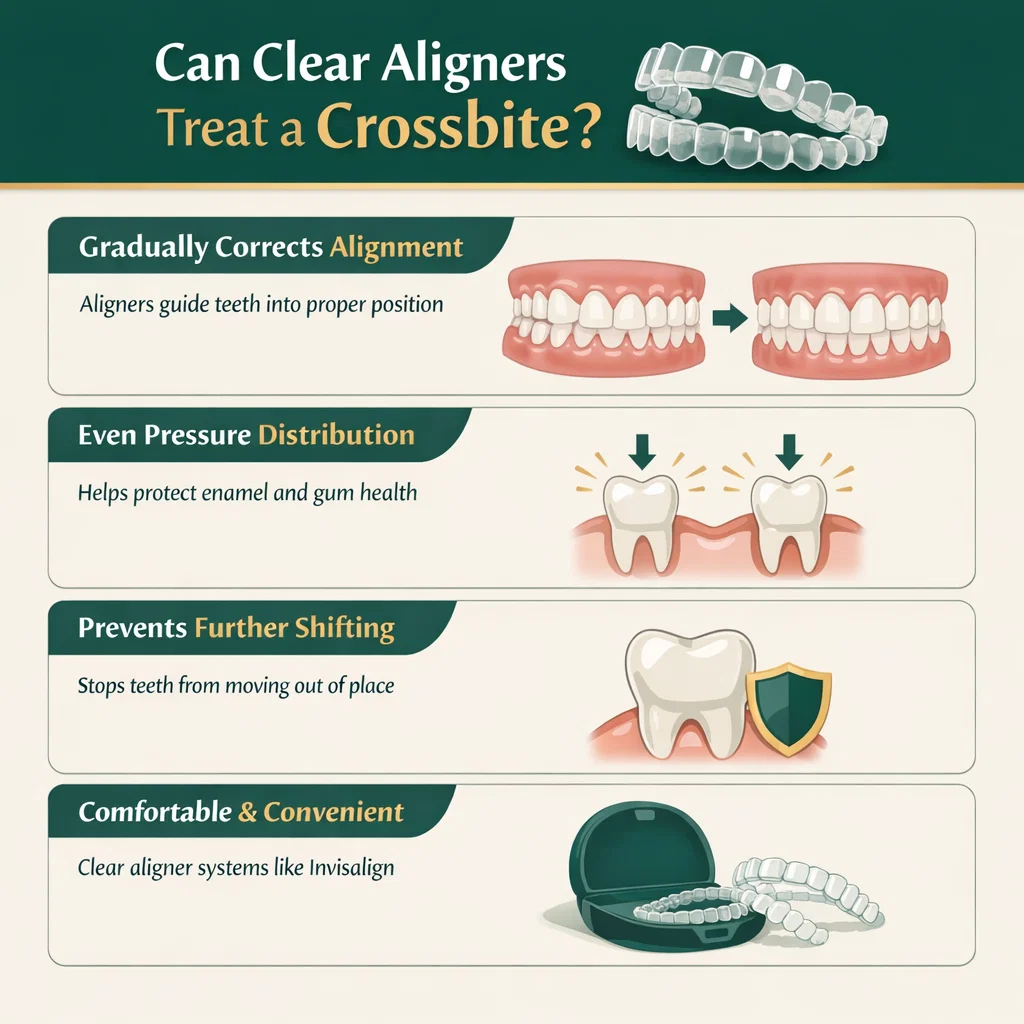
Crossbites often respond well to orthodontic correction when detected early. Aligners gradually guide affected teeth into positions that allow the upper teeth to sit properly outside the lower teeth.
By improving the alignment, the pressure placed on individual teeth can become more evenly distributed. This helps protect enamel surfaces and supports healthier gum tissue.
Early correction may also prevent teeth from shifting further out of position. Systems such as Invisalign in Parker are often used to manage mild crossbite patterns while maintaining comfort and convenience for patients.
When Aligners May Not Be Enough
Although clear aligners can address many alignment issues, certain bite problems require additional treatment methods.
Severe bite discrepancies may involve differences in jaw structure rather than tooth position alone. In these cases, orthodontists may recommend a combination of treatments to achieve optimal results.
Occasionally, braces may be used alongside aligners, or surgical procedures may be considered for significant skeletal differences. Fortunately, such cases are less common, and many patients can achieve improved alignment through non-surgical orthodontic care.
Benefits of Treating Bite Problems Early
Addressing bite concerns early can provide several long-term advantages for oral health and comfort.
When the teeth meet properly, chewing becomes more efficient. Food can be broken down more evenly, which supports healthy digestion and reduces unnecessary strain on individual teeth.
Correcting bite alignment can also help reduce pressure on the jaw joints. This may decrease the risk of jaw discomfort and help prevent long-term joint strain.
Another benefit is protecting tooth enamel. When certain teeth experience repeated pressure due to misalignment, they may wear down more quickly. Balanced bite alignment helps distribute forces more evenly across the entire mouth.
Early treatment also supports overall oral stability. Proper alignment makes brushing and flossing more effective, helping maintain healthy teeth and gums.
What to Expect During Treatment
The treatment journey typically begins with a detailed dental evaluation and digital scan of the teeth. These scans allow dental professionals to analyze bite alignment and design a personalized treatment plan.
Once the aligners are fabricated, patients begin wearing the first set of trays. Each aligner is worn for about one to two weeks before switching to the next in the series.
Periodic dental visits help track progress and ensure the teeth are moving according to the treatment plan. Because the trays are removable, patients can maintain normal eating habits and oral hygiene routines.
For many people, the gradual changes become noticeable within the first few months as the teeth move closer to their ideal positions.
Who Is a Good Candidate for Clear Aligners?
Clear aligner therapy is often recommended for patients with mild to moderate alignment concerns. Adults and teens who prefer a discreet orthodontic solution frequently choose this approach.
Patients who follow the recommended wear schedule usually experience the most consistent results. Because aligners must be worn most of the day, commitment to the treatment plan is important.
An evaluation by a dental professional helps determine whether this approach is appropriate for each individual’s bite and orthodontic goals.
Bite alignment plays an important role in overall oral health and daily comfort. Overbite, underbite, and crossbite conditions can affect chewing, jaw function, and long-term tooth stability if left untreated.
Modern orthodontic options allow many patients to improve their bite without traditional braces. Clear aligner therapy can address several alignment concerns while maintaining a natural appearance during treatment.
At Castlewood Dental, patients in Parker and nearby communities can receive a comprehensive evaluation to determine the most suitable approach for improving their bite and smile alignment.
If you have noticed bite changes or alignment concerns, scheduling a consultation may be the first step toward improving long-term oral health and comfort.
People Also Ask
How long does it take to correct bite issues with aligners?
Treatment time varies depending on the complexity of the bite problem. Many patients begin noticing improvements within a few months, while full treatment often takes about 12 to 18 months.
Are bite problems only cosmetic concerns?
No, bite problems can affect more than appearance. They may influence chewing, speech, jaw comfort, and long-term tooth wear if not addressed early.
What happens if a bite problem is left untreated?
Untreated bite problems may lead to uneven tooth wear, jaw discomfort, and shifting teeth over time. Addressing alignment early helps maintain better oral health.
How often do aligners need to be changed?
Most treatment plans require switching to a new aligner set every one to two weeks. Each new set continues the gradual movement of teeth toward improved alignment.
Are retainers needed after aligner treatment?
Yes, retainers are usually recommended after orthodontic treatment. They help keep teeth in their new positions and prevent them from shifting back over time.
Related Articles
Unable to locate Global Block : 1468