Get A Free Second Opinion Today!


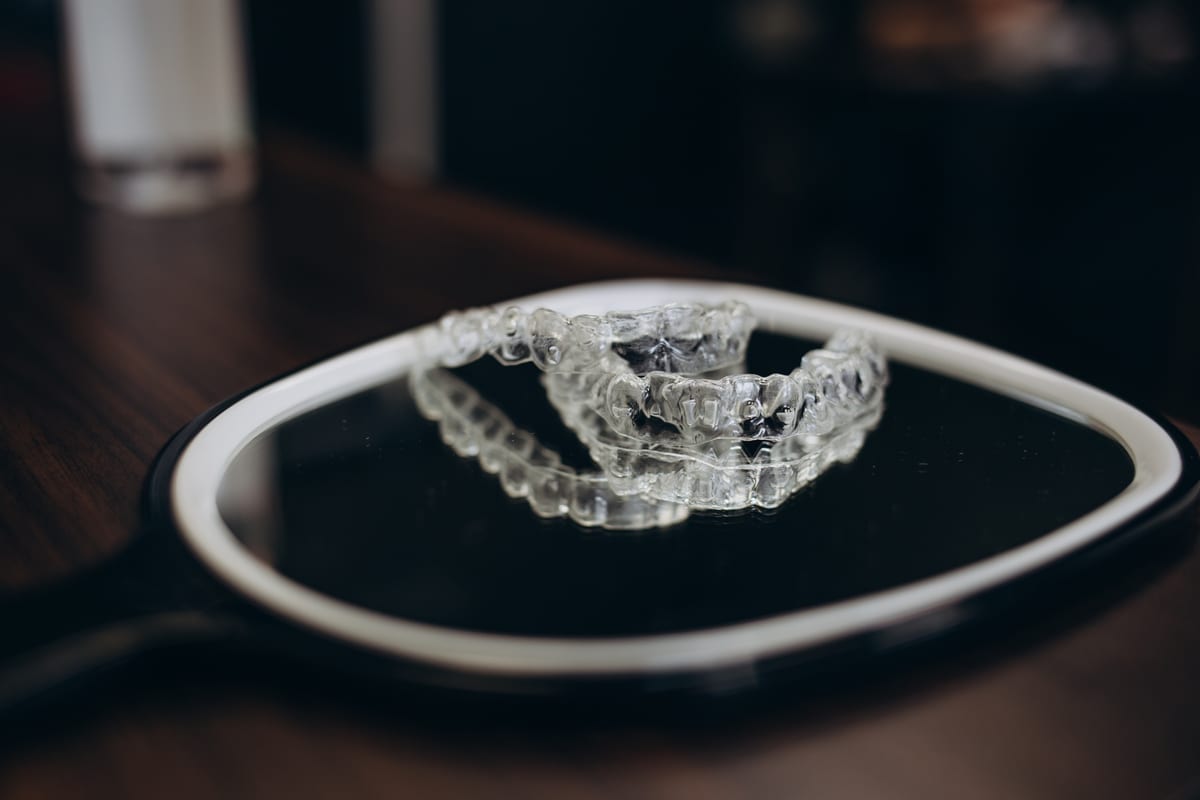
If you’re an adult in Stonegate weighing Invisalign vs. braces, you’re not alone. Many adults want straighter teeth but aren’t sure which path makes the most sense. Both options work — but they work differently. This guide breaks down the key differences so you can make a confident, informed choice.
How Invisalign and Braces Actually Work
Traditional braces use metal brackets bonded to your teeth. An archwire threads through the brackets and applies steady pressure to shift teeth over time. Your orthodontist adjusts the wire at regular visits throughout treatment.
Invisalign uses a series of clear, removable plastic aligners. You wear each set for about one to two weeks. Each aligner is slightly different, gradually moving your teeth toward the final position. You swap trays at home and visit your provider every six to eight weeks.
Both systems move teeth through controlled pressure. The mechanism is different, but the end goal is the same — a straighter, healthier smile. Understanding how each works helps you see why one might suit your lifestyle better.
Invisalign vs. Braces: Comfort and Visibility for Stonegate Adults
For most adults, appearance is the first concern. Metal braces are visible and can feel socially uncomfortable in professional or social settings. Many adults in Stonegate choose Invisalign specifically because the aligners are nearly invisible.
Comfort also differs significantly. Braces have brackets and wires that can irritate the inside of your cheeks. Invisalign aligners are smooth plastic with no sharp edges. They can cause some initial pressure discomfort, but most patients find them easier to tolerate day-to-day.
There is one key comfort advantage braces hold: they work without your cooperation. You can’t forget to wear them. Invisalign requires you to keep aligners in for 20 to 22 hours per day. Forgetting to wear them slows your progress.
- Braces: Always working, no compliance required, more visible
- Invisalign: Nearly invisible, removable for meals, requires consistent wear
- Both: Cause mild discomfort after adjustments or new trays
- Winner for most adults: Invisalign — if you’ll wear them consistently
Treatment Scope: What Each Option Can Fix
This is where many adults are surprised. Braces can treat nearly any orthodontic issue — mild, moderate, or severe. They handle complex bite problems, significant crowding, and major spacing issues with precision.
Invisalign has improved dramatically over the years. Modern Invisalign technology now treats most mild to moderate cases effectively. Crowding, spacing, overbites, underbites, and crossbites are all within its range for most adults.
Very severe cases may still require braces. Dr. Ben Sirrine can assess your specific situation during a consultation. He will tell you honestly whether Invisalign can achieve your goals or whether braces offer a better outcome.
The right choice depends entirely on your teeth — not on which option you prefer. A professional evaluation is the only reliable way to know which treatment fits your case.
Cost, Timeline, and Practical Considerations
Cost is a real factor for adults managing household budgets. Invisalign and braces are often similarly priced, though Invisalign can cost more in complex cases. Both represent a meaningful investment in your long-term oral health.
Treatment timelines vary by case complexity. Traditional braces typically run 18 to 36 months. Invisalign often completes in 12 to 18 months for adults with mild to moderate issues. However, results depend heavily on your compliance and case severity.
Maintenance is another practical difference. Braces require you to avoid certain foods — hard, sticky, or crunchy items can break brackets. Invisalign lets you eat anything you want because you remove the aligners before meals. Cleaning is also easier with Invisalign since you brush and floss normally.
- Braces: No food restrictions after treatment, but during treatment many foods are off-limits
- Invisalign: No food restrictions during treatment — remove aligners to eat
- Braces: Harder to clean around brackets and wires
- Invisalign: Normal brushing and flossing routine continues
- Both: Require a retainer after treatment to maintain results
Invisalign as Part of a Complete Smile Transformation
Many adults in Stonegate don’t stop at straighter teeth. After completing orthodontic treatment, they explore Cosmetic Dentistry options like teeth whitening or veneers to complete their smile transformation. Straight teeth provide the ideal foundation for these finishing touches.
If you have children who may also need orthodontic care, our Family Dentistry services at Castlewood Dental mean your whole family can be seen under one roof. Convenience matters for busy Stonegate families.
Dr. Ben Sirrine takes a comprehensive approach to your smile. He considers your full oral health, not just tooth alignment. That perspective helps ensure your treatment plan delivers results that last.
Making the Right Choice for Your Smile
The honest answer to the Invisalign vs. braces question is: it depends on you. Your bite, your lifestyle, your compliance habits, and your case complexity all factor in. There is no universally superior option.
What matters most is getting a professional evaluation from a provider who will give you honest guidance. Dr. Ben Sirrine at Castlewood Dental in Parker serves adults throughout Stonegate and the surrounding area. He will review your teeth, discuss your goals, and recommend the treatment that fits your life.
Choosing to straighten your teeth as an adult is a smart investment. Straighter teeth are easier to clean and less prone to uneven wear. A healthy, aligned bite supports your long-term dental health in ways that go far beyond appearance.
You deserve a smile you feel confident about every day. Let our team help you get there. Book Now to schedule your appointment with our team.
Frequently Asked Questions
Is Invisalign really as effective as braces for adults?
For mild to moderate cases, Invisalign is highly effective and produces results comparable to braces. Severe or complex cases may still be better suited for traditional braces. Dr. Ben Sirrine can evaluate your specific needs and recommend the right option for your situation.
How long does Invisalign take for adults in Stonegate?
Most adult Invisalign cases in the Stonegate area take between 12 and 18 months. More complex cases can take longer. Your treatment length depends on the severity of your alignment issues and how consistently you wear your aligners each day.
Can adults get braces, or is Invisalign the only adult option?
Adults can absolutely get traditional braces. There is no age limit on orthodontic treatment. Many adults choose Invisalign for convenience and aesthetics, but braces remain a fully valid and effective option for adults of any age.
Does Invisalign hurt more or less than braces?
Both treatments cause some discomfort when teeth are actively moving. Most patients find Invisalign aligners more comfortable overall because there are no brackets or wires to irritate soft tissue. New aligners may cause pressure for a day or two, which is completely normal.
What happens after Invisalign or braces treatment is complete?
After either treatment, you will need to wear a retainer to keep your teeth in their new positions. Without a retainer, teeth can gradually shift back over time. Dr. Ben Sirrine will provide a retainer plan as part of your complete orthodontic care.

Unable to locate Global Block : 1468