Get A Free Second Opinion Today!


If you’ve ever stood in a drugstore aisle staring at whitening strips, you’re not alone. Most Parker residents want a brighter smile but aren’t sure whether to grab a box off the shelf or visit a dentist. When weighing professional whitening vs. store kits, the differences go far beyond price. Understanding why one actually works better in Parker can save you time, money, and frustration.
What Store-Bought Whitening Kits Actually Do
Over-the-counter whitening products rely on low-concentration hydrogen peroxide or carbamide peroxide. These formulas are intentionally mild to stay safe for unsupervised home use. That means results are limited and often take weeks to appear.
Store kits come in several formats, including strips, trays, gels, and whitening toothpastes. Each works differently, but none can match the strength of a professional treatment. Whitening toothpastes, for example, mostly remove surface stains through mild abrasion. They don’t actually bleach the tooth enamel at all.
For patients with mild, surface-level discoloration, store kits can offer some improvement. But if your staining runs deeper — from coffee, wine, aging, or certain medications — OTC products will likely disappoint you. That’s one of the most important distinctions when comparing options available to Parker patients.
How Professional Whitening Works Differently in Parker
Professional whitening uses higher-concentration bleaching agents that aren’t available in stores. Dr. Ben Sirrine applies these carefully to protect your gum tissue throughout the process. The result is faster, more dramatic, and longer-lasting brightening than any kit you’d find on a shelf.
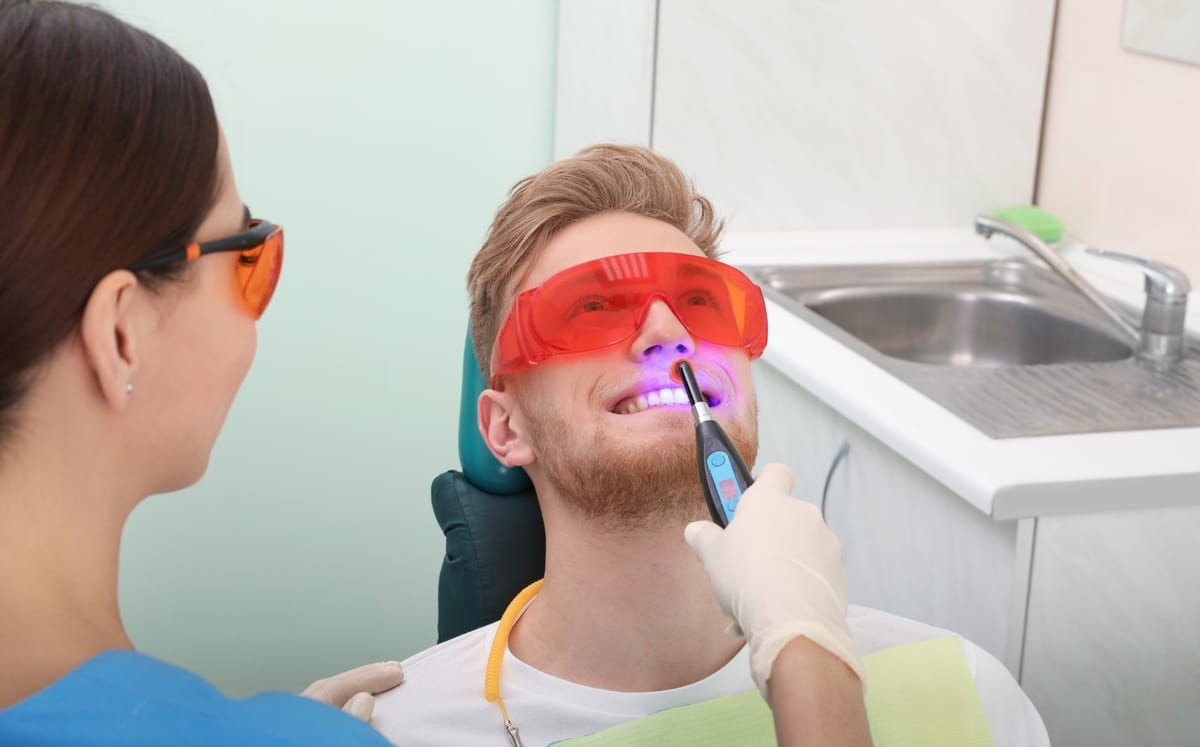
In-office whitening at Castlewood Dental typically involves custom-fitted trays or a light-activated gel system. These approaches ensure even coverage across every tooth. Uneven results — a common complaint with store strips — are far less likely with a professional approach.
Custom take-home trays from your dentist are another professional option. These are molded precisely to your teeth, which allows the bleaching gel to work evenly and efficiently. You still do this at home, but with professional-strength materials and expert guidance behind you.
- Professional-grade peroxide concentrations work faster and deeper
- Custom trays eliminate gaps and uneven whitening
- In-office treatments can brighten teeth several shades in one visit
- Dentist supervision reduces the risk of sensitivity or gum irritation
- Results typically last longer than OTC products
Side-by-Side: The Real Differences Between Your Options
It helps to see both options laid out clearly. Neither is inherently wrong — the right choice depends on your specific situation. Here’s an honest comparison of what each can and can’t do.
- Store kits: Low cost upfront, low peroxide concentration, slow results, one-size-fits-all trays, minimal dentist involvement
- Professional whitening: Higher upfront cost, strong peroxide formula, faster visible results, custom trays or in-office application, dentist-guided process
- Store toothpastes: Affordable, surface stain removal only, no bleaching effect, safe for daily use
- Take-home professional trays: Mid-range cost, professional-strength gel, used at home with custom fit, monitored by your dentist
Cost is often the first thing people compare. Store kits seem like the obvious budget choice. But if they don’t produce results you’re happy with, you’ll likely spend more trying different products over time.
Professional whitening, guided by Dr. Ben Sirrine at Castlewood Dental in Parker, delivers predictable results. That consistency has real value — especially when you’re preparing for a wedding, job interview, or reunion.
Who Each Option Actually Suits Best
Store-bought whitening works reasonably well for certain patients. If your teeth are already fairly light and you want to maintain brightness, an OTC product might be enough. People with mild staining and healthy enamel often see decent results from strips or gels used consistently.
Professional whitening is a better fit when staining is moderate to severe. It’s also recommended if you have dental restorations like crowns or veneers. Whitening treatments don’t affect porcelain or composite materials, and a dentist can help you understand what to expect for your unique smile.
Patients with sensitive teeth also benefit from professional oversight. A dentist can recommend desensitizing treatments before and after whitening. That’s something a box of strips simply can’t offer.
For those interested in a full smile transformation, whitening is often just the starting point. Cosmetic Dentistry at Castlewood Dental includes veneers, bonding, and other options that work alongside whitening for complete smile enhancement. Your dentist can help you build a plan that fits your goals and your timeline.
What to Expect From Professional Whitening at Castlewood Dental
If you’re considering professional whitening in Parker, the process is straightforward. Dr. Ben Sirrine will first evaluate your teeth and gum health. This step ensures whitening is safe and appropriate for your current dental condition.
From there, you’ll discuss which whitening method suits you best — in-office treatment or custom take-home trays. Both are effective, and your lifestyle often determines the right fit. Busy patients sometimes prefer the speed of an in-office session, while others like the flexibility of treating at home.
After whitening, your dentist may recommend touch-up trays or specific maintenance habits. Avoiding dark-colored drinks immediately after treatment helps preserve your results. Simple steps like these make a significant difference in how long your brighter smile lasts.
Whitening is one of many services available through Family Dentistry at Castlewood Dental. Whether you’re scheduling for yourself or your whole household, our Parker team is here to support healthy, confident smiles at every stage of life.
Making the Right Choice for Your Smile in Parker
The debate over professional whitening vs. store kits doesn’t have a one-size-fits-all answer. But for most Parker patients who want real, lasting results, professional whitening is the clear winner. It’s faster, more reliable, and backed by dental expertise that no drugstore product can replicate.
Store kits have a place — especially for maintenance between professional treatments. But as a primary whitening solution for moderate-to-severe staining, they often fall short. Knowing that difference helps you make a smarter, more confident decision.
Dr. Ben Sirrine and the Castlewood Dental team are ready to help you figure out which approach makes sense for your smile. Book Now to schedule your appointment with our team.
Frequently Asked Questions
Is professional whitening safe for sensitive teeth?
Yes, professional whitening can be performed safely on sensitive teeth with the right precautions. Dr. Ben Sirrine may recommend desensitizing treatments before or after your whitening session. Professional oversight allows for adjustments that store kits simply can’t provide. Most patients with sensitivity find professional whitening more comfortable than using OTC strips unsupervised.
How long do professional whitening results last?
Professional whitening results typically last between one and three years, depending on your diet and oral hygiene habits. Avoiding staining foods and beverages — like coffee, tea, and red wine — helps preserve your results longer. Touch-up treatments or custom take-home trays can extend your results even further. Your dentist at Castlewood Dental can recommend a maintenance plan tailored to your lifestyle.
Can store whitening kits damage my enamel?
When used as directed, most store kits are safe for enamel. However, overuse or misuse can cause enamel erosion and increased sensitivity. Some whitening toothpastes rely on abrasives that can wear enamel down with excessive use. A dentist can guide you on safe whitening frequency and help you avoid common mistakes.
Will whitening work on crowns, veneers, or fillings?
Whitening treatments only affect natural tooth enamel — they do not change the color of crowns, veneers, bonding, or fillings. If you have visible restorations, whitening your natural teeth may create a color mismatch. Dr. Ben Sirrine will evaluate your full smile before recommending any whitening approach. In some cases, replacing older restorations after whitening gives the most consistent result.
How much whiter will my teeth get with professional whitening?
Results vary based on the type and severity of your staining. Most patients see improvement of several shades after a single in-office whitening session. Intrinsic stains — those caused by aging or medications — may respond more slowly than surface stains. During your consultation at Castlewood Dental, Dr. Sirrine will give you a realistic expectation based on your specific situation.

Unable to locate Global Block : 1468